
The Perinatal Community Advisory Board: Raising the Bar
Stepping out of my car into this well-known parking lot, I took a moment’s pause before closing the door and starting in. I looked up at the obvious red letters of the Emergency Room and AtlantiCare’s Hospital sign. I had never noticed that blue letters make up the last of the word “Care.”
When a woman in the throes of pain or uncertainty drives an hour from our area to reach this care, all she sees is red.
I closed the door.
Walking into the non-emergency entrance of the hospital for the first time, I recognized a new chapter beginning, where for the first time in years, there was no impending pain or emotional discomfort waiting for me inside this new door. Checking in for my badge as a summoned professional, I felt the weight, the power, of how much could change in one year. Knowing that my young and healthy 12-month-old sat safely at home, I carried only the invisible strength of motherhood into a new board room.
For once, I was here for other women.
The Perinatal Community Advisory Board (PCAB) sat for its inaugural meeting this past week at the AtlantiCare Regional Medical Center in Galloway, NJ. A room full of passion and purpose came together for the first of a two-year mission to improve the connection and perceived success of maternal care through the hospital system; Nurses, NICU operators, midwives, doulas, community health workers, lactation consultations, maternal fetal medicine specialists, hospital executives, and a few civilians with something to say sat around a U-shaped table facing a blank screen.
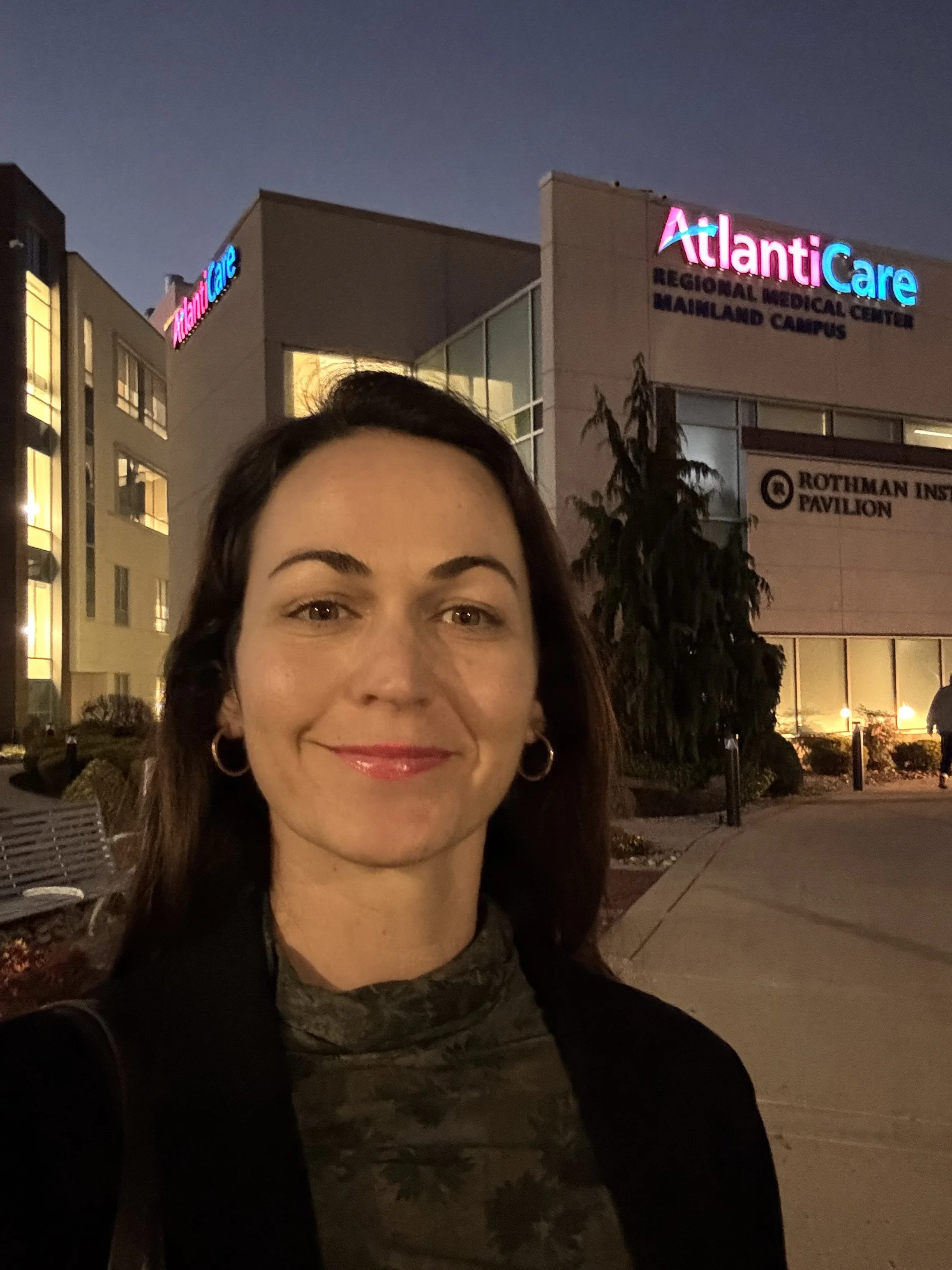
We were all recommended or invited to be here.
I, being the only manual therapist and alternative care provider in the room, looked past the corporate and emergency level providers, past my own insecurities of my field being considered “less than” or “obsolete” in such a setting, and eagerly focused on the presentation about to begin at the front. I waited through an intimate round of introductions and each individual’s “why” for being committed to birthing work before understanding the mission and what I hoped to contribute.
A presentation commenced.
Privacy and communication forms were signed.
We planned to meet in two months.
Was a main problem or focus for the group identified?
No, not that I could grasp.
But it was the first of many meetings which they hope will grow into active planning. From working with women and experiencing my own two deliveries at the hospital, I knew there were problems in the form of bedside manner, hospital intimidation, and poor communication existed.
But, What About You?
The women. The initiated. The, “overall, I can’t complain because I’m here and the baby is here.” The ones who have probably layered that rough first event with another one or two deliveries and gotten over it. The “it is what it is” crowd of heroes.
And I’m not overlooking you…
The men. The fathers who stood helpless next to their women and danced between feeling useless and angry. Who “stayed out of the way” until provoked enough to lash out to defend their partner who was actively losing ground against a clock and decisions being made for them.
Thrown into the initiation of parenthood between floors you wouldn’t walk on barefoot and fluorescent overhangs that you ask to turn off in minor sections, both parties leave exhausted and shell shocked, amazed how much their lives have changed in the two to four days since parking the car.
This normalized story is considered “Best Care.” Until, perhaps, now.
No one that I know enjoys the hospital section of having a baby (Which I consider conception through a first birthday), and finally, the hospital wants to know, why?
Why?
How?
If?
When?
Two Questions for Where?
And, lastly, Who?
Why do you think the hospital and its prenatal system failed you in some way?
How can they continue to operate safely, efficiently, and within their scope of care yet offer you more of a partnership?
If it was possible to better bridge the gap between your privacy during pregnancy and the professional yet invasive nature of a hospital, how could they become more inviting or welcoming?
When do you feel that you needed the most support, that you looked outside yourself for answers during this radical life change? (fertility, prenatal, labor and delivery, postpartum etc.)
Where then, did you find yourself again? Maybe the next pregnancy? Or, in reflection, which avenues did you wish you knew to take during that early experience?
Where would you have preferred to have your baby, to have been less affected by the daunting nature of a hospital? For example- If a medical mid-way was available to you like a service that comes to your home, or, at a birthing center associated with the hospital.
Who within your birth stories, would you celebrate for the comfort or care that they gave you? Which departments, if any, made you happy to be under the care of the hospital team.
With complete transparency, I am the one tossing these insights and questions into the ring, for the sake of the medical field. I am the one who has witnessed and clenched through these oversights in “the system” and have listened to a decade of patients retelling their experiences.
I… am the one asking.
Because now that I have been let in the room, where conversations could turn into action, I hope to be the one who won’t let these questions, your answers, be glossed over.
The skeptic in me worries that hospital programs, with their limited grants and short-term fundings, are more of a formality than a true ignition for policy change. Sitting in the meeting, hearing how strongly both men and women feel about perinatal care, I stay slightly disconnected, protective and pragmatic as I think, Where will the powers-that-be allow us to insert real hearts, real hands, and real hope into its well-oiled machine?
My mission, as I was only then discovering, is to stir the pot in the room and hold this new committee accountable for what they’ve started.
MY MISSION
1. I want to see real issues drawn up for each member to grasp the severity and magnitude of how they affect our large birthing region.
2. I want to pitch education programs from some of the masterful women I’ve learned from over the years to help schedule training for hospital employees that deliver babies; there are simple postures to identify, and safe movements to teach in response, that will better prepare pregnant patients before their “time is up.”
3. I want their continuing education to include topics on physical touch as much as the data and new medicines they seek.
4. I want QR codes visible in the OBGYN offices for free resources to both mental and PHYSICAL preparation for having a baby.
To kindly say to the hospital, “LET OUTSIDE SPECILAITIES TAKE SOME OF THE WORK OFF YOUR HANDS.” Does gatekeeping information stem from the operational fear of liability or that the answers would lead to providers not under your roof? Troublesome pregnancies may benefit from nutrients that prenatal care doesn’t test for or cover. Beyond, “are you still taking pre-natals?” let the families make those financial decisions from an educated place. Horrible deliveries surely could have benefited from months of safe, physical movement or pelvic floor PT prior to that day; most mothers don’t understand that this exists for them, often for free, online.
5. I think bringing back a scheduled hospital tour before full-term deliveries should be part of each pre-natal plan for visualization and emotional preparedness; A better understanding of how the baby and body will be treated during delivery could reduce labor stalling stress and increased interventions as a result. Let them see the blue letters of CARE.
6. I think clinicians need to have some freedom for question asking, putting the person back into personal health insurance.
I am apparently of the 10% of women that deliver in the hospital with a graduate degree, making me privy to knowledge or know-how that others are without. I have always had my questions and concerns discussed on an open playing field within this health system… because… I know what to ask. The monthly, “Have any questions or concerns today?” Does not cut it.
I want, “Have you given any thought of how your delivery will go in the hospital yet?” Or, “I see you have a history of some accidents and illnesses already; how do you think you’ll feel stepping into the hospital again? And this time, while under a lot of pressure?”
Avoiding these gray areas is not keeping the providers safe from liability and it’s not helping women by avoiding to overwhelm them. If anything, it’s medical neglect in the form of omission. “No questions or concerns” typed into a patient note could be costing both the hospital and patient, thousands of dollars of avoidable intervention/emergency services.
And you cannot put a price tag on mental sanity or permanent feminine pride that gets tarnished as result.
CONCLUSION
So, while my missions are lofty and numerous, I am happy to have them; To release them and list them is the first step toward sharing them as desires and becoming educated on the realities of their implementation. Because, like I said, I am staying pragmatic in the presence of a passionate subject. I have MUCH to learn in this new setting.
Humbly, I am immensely honored to be in the room with this advisory board; I was floored by learning about the size and disparity of the population that this health system currently treats. Because the demographic of patients that I care for (and fall into) is higher income, better health, higher education, and with more supportive family units, it was uncomfortable to want to lessen my birthing expectations, to downplay my experiences, after learning that other populations had it worse.
For an educated, financially comfortable, white woman to have had life threatening exposure, learning that it is 7x more likely for a woman of color to feel like she is losing her voice and her life in the hospital during delivery, was sobering. Many of these women too, come in with serious health conditions and are up to ten years my junior; It was overwhelming to think how much variety a medical team has to prepare for.
But raising the bar of maternal health in New Jersey has to stay together. It cannot be aligned if we subconsciously divide an “us” among “them.”
Babies are being born to mothers.
Regardless of know-how, finances, health history, or health future.
They’re coming and they need us.
As much, as it often turns out, that we needed them.
Let’s make this a better start for them.
A comfort to return to.
Because that’s what true CARE means.
Safety that stays with you in feeling, one that extends past its presence, a glow.
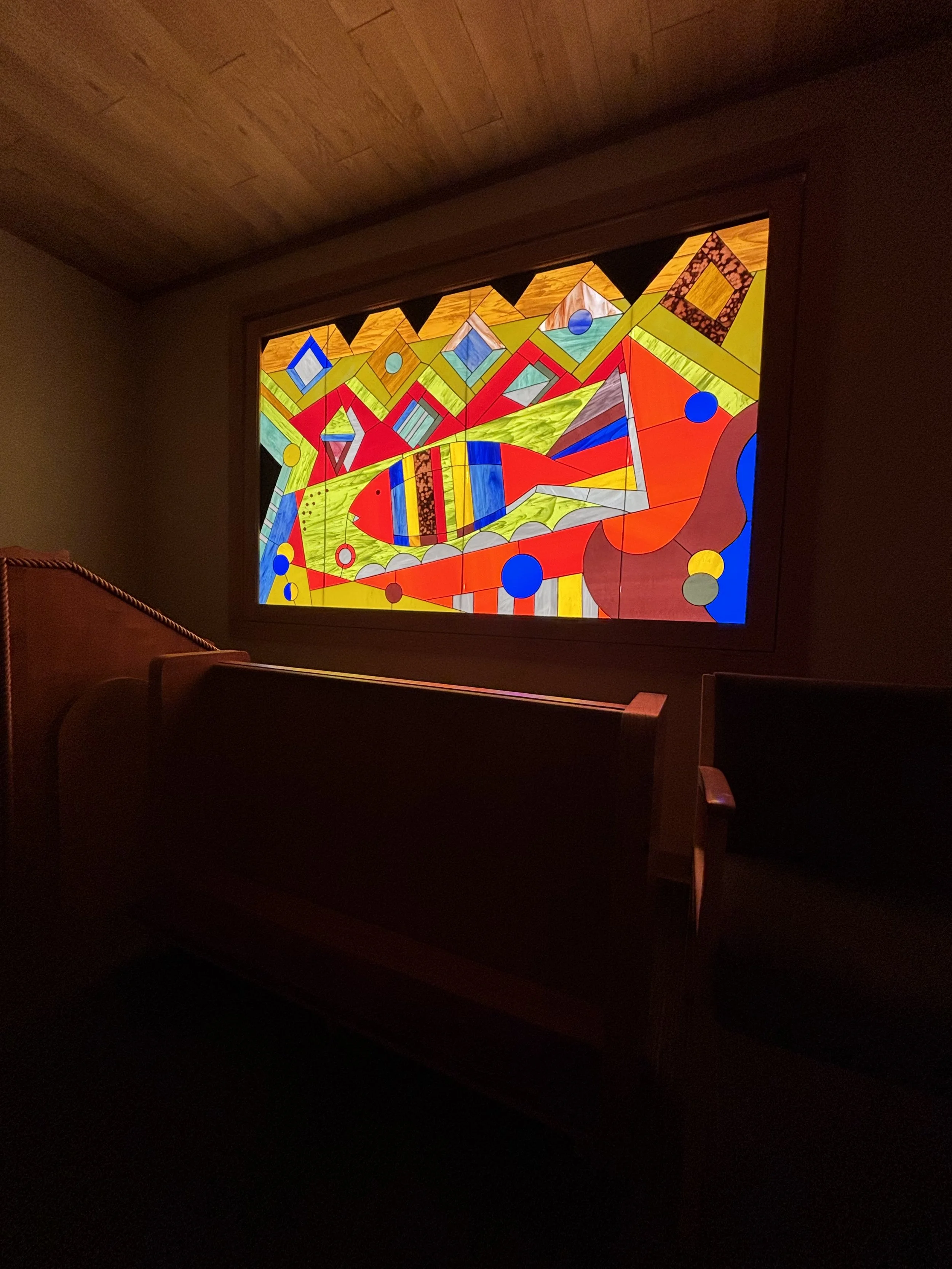
And glow it did.
Walking back toward the entrance of the hospital, through quiet cafeterias, basement level tunnels, spooky elevators, and past exhausted young medical professionals, I wasn’t expecting an open door to catch my eye.
A wooden door stood open, a material in contrast with everything sterile and updated around it, and allowed a glowing to shine into the white hallway. “Chapel” was spelled out vertically on a small stain glass section within the door.
This, I was surprised to have thought, should be closer to delivery.
I let myself into the empty room and sat in the first pew. A vibrant mosaic of color brought a large fish to life in front of the small worship area. If nothing else, if no thoughts or prayers could get to the surface, it felt inviting, warm, and personal; a major rarity in a hospital setting.
I thought that I had released all my birthing trauma, but being handed a chance to alter and possibly prevent it all from happening to other women brought it all back in a fiery flash.
The comfort of this room gave me brief yet sweet time to surrender it up. To feel gratitude for a chance to both heal and offer healing in return. To say that this night was illuminating is not a cheap play on words. It’s how I felt, how I expect the rest of this opportunity to be.
If this material ignites something in you and you’d like to learn more, I’ve attached resources below for scrolling public data and interesting conversations you may not know exist!
If researching for your own birth, compare and contrast hospitals here….
Find birthing data for the hospital made public with fascinating charts here. ( Will be updated in January)
1. Scroll down until you see the map
2. Select the Hospital OR, fascinating, do the side-by-side comparison for
- Atlanticare
- Shore Memorial
- Virtua Voorhees
3. Then peruse the many tabs and options.
Read the Difference Between a Baby-Friendly Hospital and a Mom-Friendly Hospital
(Only Virtua is considered a Baby-Friendly Hospital down the shore….why??)
Learn more about the PCAB Initiative here
Get serious and download the resources that the hospital is being assessed with here.